
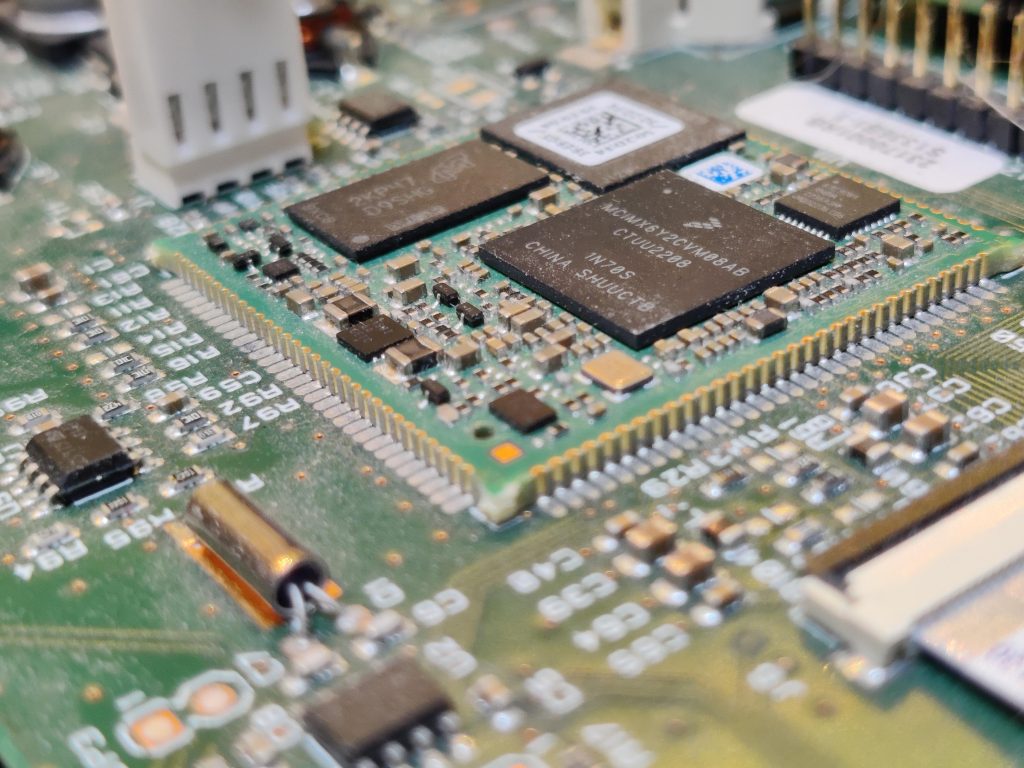

Embedded
Reliable
Industrial
System
Easy to use embedded Linux system.
Docker container isolation for application code.
Remote deployment, management and update.
Presentation
What We Offer

Easy to use
Eris Linux is the easiest embedded system to configure, install, and use, both for the base system and for the application-specific code.
You never need to compile anything other than your own application code.

Safe and reliable
Eris Linux is built using the Yocto Project in accordance with the latest embedded system standards. It uses encryption to protect application code and data stored on deployed devices.

Remote management
The Eris Linux Device Manager lets you remotely manage your devices, collect operational statistics, and update the systems. You manage your device fleet by organizing your devices into groups and deploying on them the containers of your choice.

Cyber Resilience Act
Compliance with the C.R.A., which will soon take effect in Europe, requires having an update system in place and monitoring the system for potential vulnerabilities. Eris Linux meets both of these criteria.
Features
Easy to Use
For you, Eris Linux comes in the form of a ready-to-install image, offering robustness, power, and the possibility of regular and secure updates. On top of this image, you will install your application code in isolated containers.
The base Eris Linux system is built by our team using the Yocto Project, ensuring a state-of-the-art embedded system production. But you don’t need to know anything about Yocto.
The only software you will need to worry about is your application program, which you can develop, deploy, and update independently of the underlying Eris Linux system. The Eris Linux API gives you access to all the device features.
Safe and reliable

Our engineers’ expertise in the Yocto Project enables us to develop a robust Eris Linux base system that can withstand the challenges of an embedded system (power outages, rough handling, faulty peripherals, or unreliable communication).
The contents of your containers can be encrypted before being stored on our server.
Only you know the encryption password; it is never stored on our site. When you deploy a container to a group of devices, you re-enter the password, which is transmitted using asymmetric encryption to the relevant containers.
On the deployed devices, the partitions storing the containers and application data are encrypted using the Linux kernel’s dm-crypt mechanism.
Remote Device Management
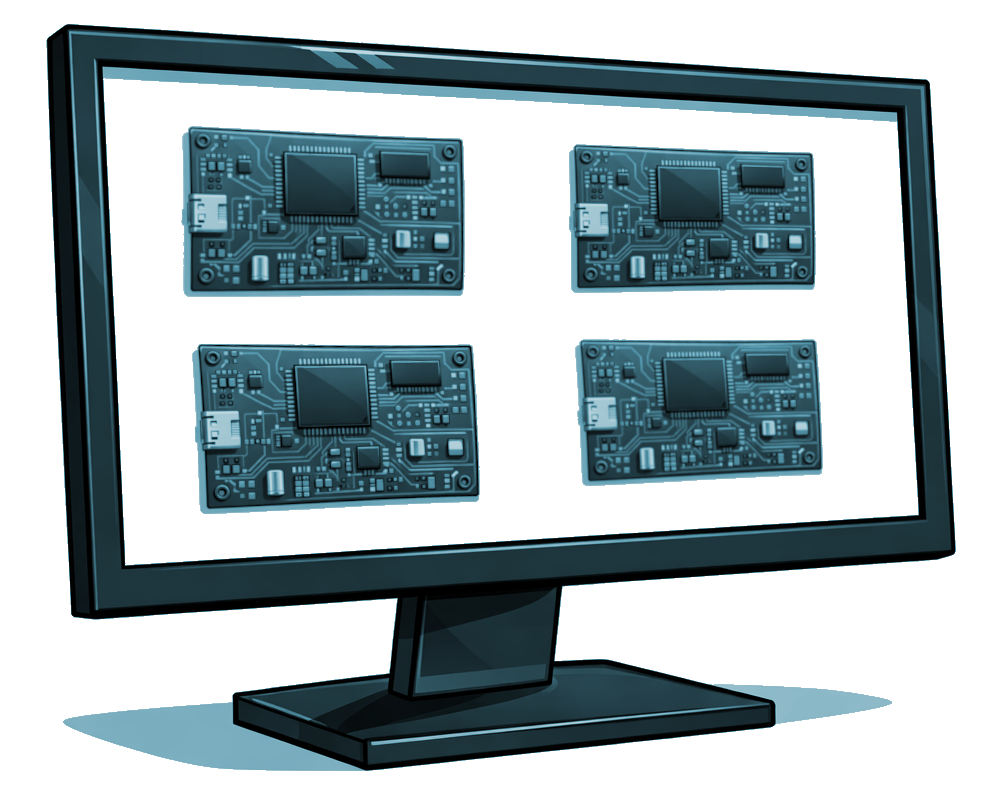
The Eris Linux Device Manager was designed with usability and ease of use in mind.
It allows you to effortlessly configure new devices and monitor their status. You can also upload containers containing your application code and deploy them to the container groups of your choice.
Multiple users within the same company can collaborate to manage shared device groups.
Finally, when a device reaches the end of its lifecycle, it can be decommissioned remotely to ensure that the data and containers it contains are securely erased.
Cyber Resilience Act

The European Cyber Resilience Act primarily requires three elements:
- Incorporating cybersecurity considerations from the system’s design phase.
- Having an update system that allows for the replacement (remotely or by accessing the equipment) of any software component with a security vulnerability.
- a process for monitoring known vulnerabilities, notifying users, and correcting detected security flaws within a reasonable timeframe.
The very design of Eris Linux allows you to easily meet these requirements by focusing solely on your application code and letting us manage the base system outside the containers.
Availability
Eris Linux is available directly on several popular off-the-shelf boards (Raspberry Pi family, BeagleBone, etc.). So to test Eris Linux, all you need to do is download a ready-made image and install it on one of the boards you probably have lying around in your drawers.
For custom boards—whether based on a commercial system-on-module or designed entirely for your project—simply ask us to port and maintain Eris Linux on your system.
Contact us to discuss your project, and we’ll ask you all the necessary technical questions to provide you with a commercial proposal for the port.
Pricing (2026-2027)
There are three key factors to consider when determining the cost of using Eris Linux:
- The cost of porting Eris Linux to the target board, its annual maintenance, and the deployment of updates to the devices.
- The cost of regular communication between the embedded systems and the remote device management server
- The cost of developing and deploying containers containing the custom application code.
Here are our rates for these various items.
| Widely available Commercial Off-The-Shelf (COTS) Board. | Custom Board designed specifically for your project. | |
| Initial port of Eris Linux on your board. | Free (*) | About 5.000 € Contact us for a commercial proposal |
| Annual maintenance of Eris Linux port for your board | Free (*) | About 3.000 € / year Detailed in our commercial proposal |
| Annual devices maintenance (system update deployment) | Free up to 2027/09 then 3 € / device (decreasing with the number of devices) | Free (**) |
| Periodic contact between devices and Device Manager | Free up to 2027/09 then 0.001 € / contact | Free (**) |
| Container upload to the Device Manager | Free up to 2027/09 then 2 € / container | Free (**) |
| Container deployment from the Device Manager to the devices. | Free up to 2027/09 then 0.50 € /device (decreasing with the number of devices) | Free (**) |
(*) See the Device Manager for the list of supported COTS boards.
(**) Subject to reasonable use. Restrictions may apply.
Eris Linux base system
Commercial Off-The-Shelf Board – Few devices
The Eris Linux base system support is free for COTS (Commercial Off-The-Shelf) board, as soon as the board is available on our site. Contact us if this is not the case.
Suppose you have 20 devices deployed. After 2027/09, updating regularly the base system will cost you;
- 20×3 = 60 € / year for annual Eris Linux maintenance.
Specifically designed board – Many devices
For example, if you have a fleet of 100 devices based on a board specifically designed for your project, Eris Linux support will cost you:
- approximately 5,000€ for the creation of the initial image (contact us for a detailed quote).
- About 3,000€ per year for maintenance of the initial image as updates are released (approximately 6 times per year).
Eris Company

Christophe B.
Alexandre G.
Try Eris Linux!
Download a free Eris Linux image for one of the well-known development boards lying around in your drawer.
Install Eris Linux on the board, and use our Device Manager to add one or more precompiled demo containers.
Develop and deploy your own containers by following our tutorial.
You’ll be able to fully appreciate the potential and ease of use of Eris Linux!